Industries

Digital marketing for ecommerce and D2C brands

Ecommerce digital marketing is arithmetic before it is creativity. Your average order value, gross margin, return rate and repeat rate decide how much you can pay to acquire a customer, and every channel decision follows from that. Zuptek Infotech runs growth marketing for D2C brands and online stores across India and abroad, from a first Shopify launch to established catalogues. The thing that matters most is a blended customer acquisition cost that your margin can carry after COD returns, and a retention system that brings the second order in without paying for it again.
search.google.com/search-console
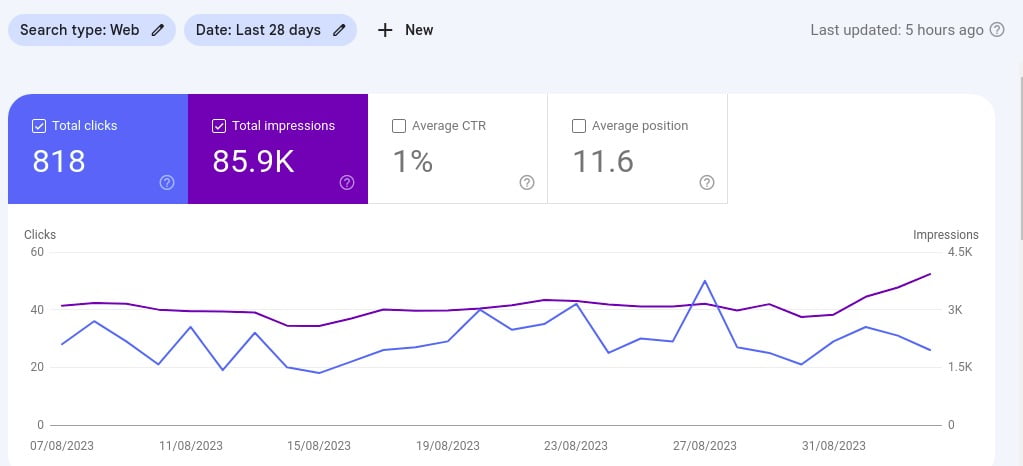
Google Search Console performance for an ecommerce store: 818 clicks and 85.9K impressions in 28 days
85.9Kimpressions in 28 days, store
267Korganic clicks, FMCG brand

Brands we have worked with across the group

In detail

How shoppers find an online store today

Indian online shoppers move between marketplaces, search, social and messaging within a single purchase.

Marketplaces set the benchmark

Amazon and Flipkart are where most shoppers compare price and reviews. Your own store has to give a reason to buy direct: bundles, exclusives, better service, or a lower price on repeat orders.

Google Shopping and Search

“Cold pressed mustard oil 1 litre price”, “cotton kurta sets under 1500”, “[brand name] reviews”. Shopping ads show your product and price before the shopper clicks. Ecommerce SEO on category pages brings free traffic that compounds.

Instagram and Facebook

Discovery happens here. Reels, creator content and catalogue ads introduce the product; retargeting closes it. For many D2C brands in India, Meta is where the first orders come from.

YouTube

Reviews and unboxings, especially for electronics, appliances and skincare.

WhatsApp

Order confirmation, delivery updates, COD confirmation, abandoned cart recovery and repeat purchase nudges. Open rates on WhatsApp make email look slow.

Quick commerce

Blinkit, Zepto and Instamart now shape expectations for delivery time in metro areas.

Not sure where to start?Get a free written audit of your website in two working days. No obligation.
Deliverables

What we do for ecommerce and D2C brands

Google Shopping and Search

  • Merchant Center feed clean-up: titles, GTINs, prices, availability and images that match the page.
  • Standard Shopping for control over bids, Performance Max for scale once data exists, and branded Search to protect your own name.
  • Campaign structure by margin tier so bestsellers and low-margin lines do not share a budget. See Google Shopping ads.

Meta ads for acquisition and retargeting

  • Creative testing in volume: creator videos, problem-solution reels, founder story, offer ads.
  • Catalogue ads for retargeting with dynamic products and bundles.
  • Conversions API set up so Meta sees purchases accurately. See Facebook ads.

Ecommerce SEO

  • Category page strategy and copy, product schema with reviews, faceted navigation rules, and internal links from content to the pages that sell. See ecommerce SEO.

Store build and conversion

  • Shopify or WooCommerce stores with Razorpay, UPI, COD with OTP verification, Shiprocket and GST invoices.
  • Speed, checkout flow, trust signals and bundle logic tested against real data. See Shopify development.

WhatsApp and email retention

  • Abandoned cart, order updates, COD confirmation, review request and replenishment reminders on WhatsApp.
  • Segmented email for launches and loyalty. See email and WhatsApp marketing.

Content and creators

  • Buying guides, comparison pages and ingredient or material explainers that rank and convert.
  • Creator briefs and usage rights for ad content. See content marketing.
What to expect

Compliance and industry rules

A D2C brand selling from its own website is an inventory e-commerce entity under the Consumer Protection (E-Commerce) Rules, 2020. The site must prominently show your legal name, the address of your headquarters and branches, customer care contact details, and the name, contact details and designation of a grievance officer, who must acknowledge a complaint within 48 hours and resolve it within one month. Rule 7 also requires clear information on returns, refunds, exchange, warranty, delivery, payment methods and the total price with a breakup of charges and tax, bars fake reviews, and requires ads to match the product’s actual characteristics. Sellers on marketplaces must give the platform the same details, plus country of origin. The Legal Metrology (Packaged Commodities) Rules, 2011 require the mandatory package declarations (such as MRP, net quantity, manufacturer or importer details and country of origin for imports) to appear on the online listing as well as on the pack. The Central Consumer Protection Authority’s Guidelines for Prevention and Regulation of Dark Patterns, 2023 list 13 prohibited practices, including false urgency, basket sneaking, drip pricing and subscription traps, so countdown timers and pre-ticked add-ons need care. ASCI’s influencer guidelines require a clear label such as “Ad”, “Sponsored” or “Collaboration” on every post where the creator has a material connection with the brand, and from March 2025 creators commenting on health and nutrition products must state a relevant qualification. Food, cosmetics and ayurvedic products also carry their own licensing (FSSAI, CDSCO, AYUSH). We review product pages, checkout and ad copy against these before launch.

In detail

A 90-day plan for a D2C brand

  • Work out contribution margin per order after returns and shipping, and set a target CAC.
  • Fix GA4, Meta Conversions API, Merchant Center and WhatsApp integration.
  • Clean the product feed and the top 20 product pages.
  • Launch branded Search and a small Shopping campaign to establish a baseline.

Days 31 to 60: find what sells

  • Run structured Meta creative tests across 8 to 12 angles.
  • Launch WhatsApp abandoned cart and COD confirmation flows.
  • Start ecommerce SEO work on category pages and publish the first 4 buying guides.

Days 61 to 90: scale what works

  • Move budget to winning creatives and products. Introduce Performance Max if Shopping data supports it.
  • Launch repeat purchase and review request flows.
  • First quarterly review: CAC, blended ROAS, return rate, repeat rate and contribution profit by channel.
Proof

What results look like

We report blended CAC, contribution margin after returns, ROAS by channel, repeat purchase rate and revenue from retention flows. Platform ROAS on its own hides returns and discounts.

Published ecommerce and consumer-brand results from our SEO team:

  • Standard Cold Press (FMCG, cold-pressed oils): 42.7M Google impressions, 267K organic clicks and 31.2K AI citations in Bing over the periods shown in Search Console and Bing Webmaster Tools. Read the case study.
  • Ecommerce website (2025): monthly organic visits grew from 7k to 31k through category and product page work, internal linking and technical SEO.
  • Ecommerce website (2023): organic revenue grew 3x after category and product optimisation and technical fixes.
  • Furniture ecommerce brand (2026): regional rankings and organic orders within three months, with the brand appearing in AI-generated answers for furniture searches.

The last three come from the client results record of our Head of SEO. For a view of ad budgets, read our guide to Google Ads cost in India.

Proof

Screenshots from client accounts

Unedited Google Search Console and Google Business Profile screenshots from client accounts. Names are withheld at the clients’ request.

Google Search Console performance for an ecommerce store: 818 clicks and 85.9K impressions in 28 days
Ecommerce store818 clicks, 85.9K impressions in 28 days
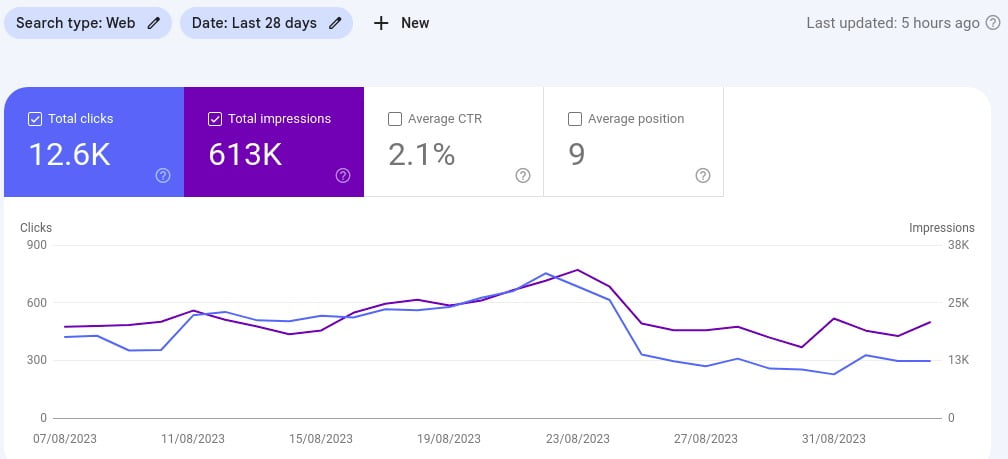
Google Search Console performance for an Amazon affiliate website: 12.6K clicks and 613K impressions in 28 days
Amazon affiliate site12.6K clicks, 613K impressions in 28 days
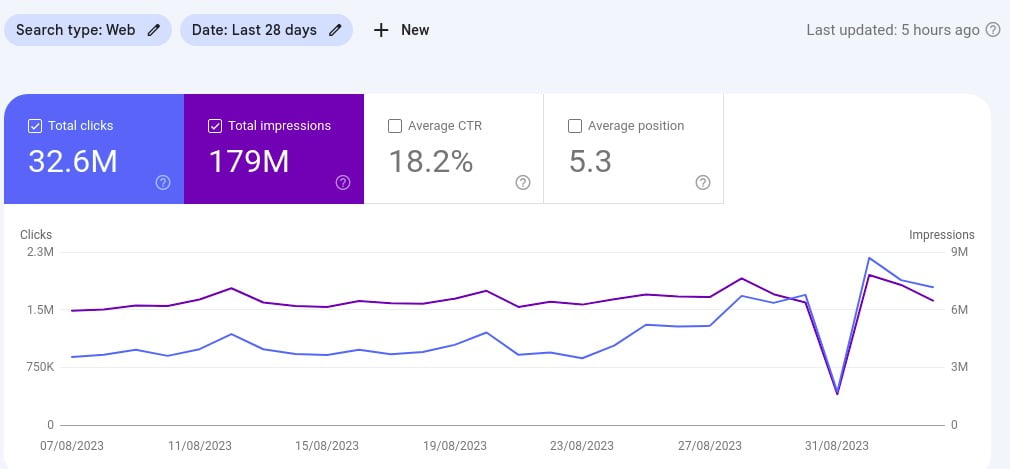
Google Search Console performance for a financial and banking website: 32.6M clicks and 179M impressions in 28 days
Financial and banking site32.6M clicks, 179M impressions in 28 days
Pricing

Pricing

  • Ecommerce SEO: our Business SEO plans are Rs 9,999 (Starter, 10 keywords and 10 pages), Rs 19,999 (Gold, 25 keywords, 25 pages, schema and competitor analysis) and Rs 34,999 (Premium, 60 keywords and Core Web Vitals work) per month. Most stores with a real catalogue start on Gold.
  • Google Ads and Shopping management: custom quote after a free audit of your account, feed and margins.
  • Meta ads management, with or without content production: custom quote after a free audit.
  • Shopify or WooCommerce store: estimate your build with our website cost calculator, then get a fixed, itemised quote.
  • WhatsApp and email retention set-up: quoted per scope.

Ad spend and platform fees are paid directly to the providers. All fees exclude 18% GST.

Platforms and tools we work in every day

Shopify
WooCommerce

WordPress

Razorpay

Shiprocket

WhatsApp Business

Meta Ads

Google Analytics 4

Google Tag Manager
Shopify
WooCommerce
WordPress
Razorpay
Shiprocket
WhatsApp Business
Meta Ads
Google Analytics 4
Google Tag Manager
Questions

Ecommerce digital marketing: questions people ask

Anything else? Call +91 98218 37342 or write to [email protected].

How much does it cost to market a D2C brand in India?

It depends on your margin per order, your repeat rate and how fast you want to grow. We work out the target CAC first and size the ad budget from there. Our SEO plans are published from Rs 9,999 per month; ads and retention work are quoted after a free audit, and ad spend is paid directly to Google and Meta.

What is a good ROAS for ecommerce in India?

It depends on margin. Break-even ROAS is roughly 1 divided by your contribution margin: about 1.4 at a 70% margin and about 2.9 at a 35% margin, before returns, shipping and payment fees push it higher. Blended ROAS after returns is the number to watch, not platform ROAS.

Should I sell on Amazon or build my own store?

Both. Marketplaces give volume and trust; your own store gives margin, customer data and repeat sales. Most successful Indian D2C brands run both and use WhatsApp to pull marketplace buyers into their own store for the second order.

How do I reduce COD returns?

OTP or WhatsApp confirmation before dispatch, a prepaid discount, address validation at checkout and blocking repeat RTO pin codes. We track RTO by pin code and payment method so you can see which step is working.

Does SEO work for ecommerce stores?

Yes, especially for category and buying-guide searches. It usually takes several months to build, often 4 to 6, but then supplies traffic you do not pay per click for, which makes it one of the most cost-effective channels at scale.

Do you work with manufacturers who want to sell direct?

Yes. We help manufacturers plan and launch D2C lines or B2B ordering portals alongside their existing dealer business. See our manufacturing and B2B page.

Get a free audit of your store and ad accounts

Send us your store URL and we will return a written review of feed, tracking, page speed and campaign structure within five working days.

WhatsApp us